Bibi-Heybat Mosque
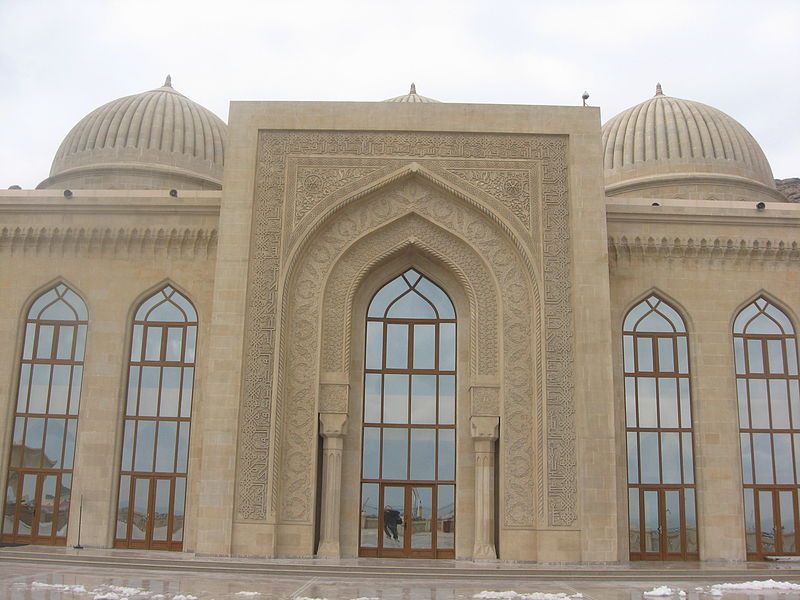
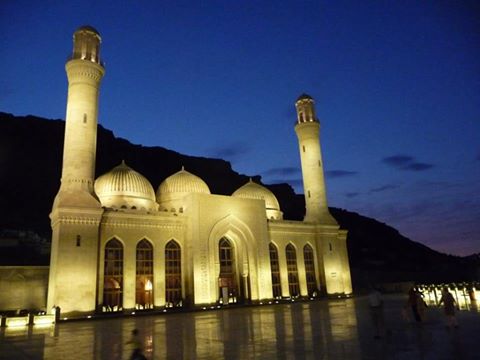
Bibi mosque – Azerbaijan Republic of the Baku bay located on the Shiite mosque . The mosque, built in 1990, is a restored version of the same mosque, built by the twenty-eighth ruler of the Shirvanshahs state, during the second half of XIII century by Azerbaijan’s Elkhanid state, by Abu Fath Farrukhzad ibn Akhsitan ibn Faiburz. The mosque, built by Mahmud ibn Sad, was completely destroyed by the Bolsheviks in 1936 during the struggle against religion in the USSR . 
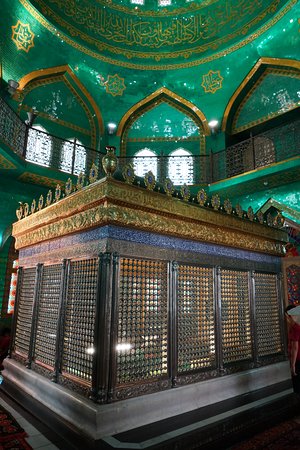
In the Bibiheybat complex, besides the mosque, there are cemeteries and graves belonging to respected individuals, such as Doctor Hanım, from the Seyid descendants. This monument is the most important example of Islamic monuments in Azerbaijan. The Azerbaijani poet Abbasgulu Agha Bakikhanov, famous French writer Alexander Duma and daughter of Mehdigulu khan Javanshir, Khurshidbanu Natavan, the last judge of the Karabakh khanate visited this mosque. Representatives of foreign countries visiting the mosque are currently visiting the mosque.
The old mosque was located in the southern part of the tomb, while there was a 20 meter high minaret in the west part of the mosque. Later a crypt and two niches were added to the mosque to the south of the minaret. On the niches there were inscriptions containing the name Fatali Khan, whose tombstone marble slab is now in the State Museum of History.
History
From 1305 to 1313, Mahmud Ibn Saad built the mosque’s minarets. The top of the thread and stalactites, raised by a small pillar, surmounted by a semicircular dome of Rebrov. Railing minarets were patterned with stone grill. Graphic studies showed that the height of the minaret was about 22 m.
İnterior
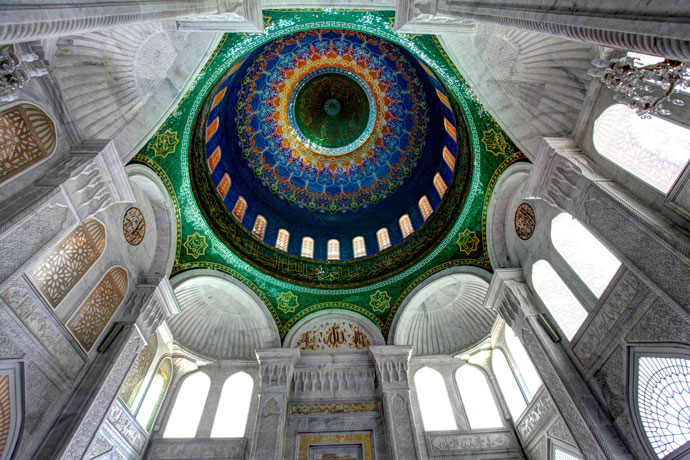
The rich interior of the complex was decorated with ornaments. The interior of the mosque is an oblong rectangular room with a lancet arch. Under the dome, there were chandelier-candlestick, and a hook on which it hung was surrounded by stained glass.
Johannes Albrecht,Bernhard Dorn, was found on the north side of the minaret and the mosque, immediately adjoining the tomb . From the inscription it was clear that this mausoleum was built in 1619 and was shered by Sheikh Sharif Sheikh Bin Abid, who died the next day after work.